Remove Old Attic Insulation Before Adding New?
Usually not. If the old insulation is dry and clean, the new layer goes on top. Wet, soiled or rodent-damaged insulation comes out first.
Do you have to remove old attic insulation before adding new? Usually not, as long as what's up there is dry and clean. It only has to come out first when it's wet, soiled or damaged by rodents, and that's when attic insulation removal goes ahead of everything else. Here's how we decide what stays and what goes in a Mississauga attic.
When the old layer can stay
Dry insulation can stay where it is, as long as there are no droppings, no nests, no water stains and no smell. Looking tired is fine. Fibreglass that has slumped between the joists, or cellulose that has settled unevenly, is still doing its job, and a top-up of blown-in insulation goes straight over it.
Original insulation may well be what you have. Plenty of older backsplits and bungalows in the east end still have whatever went in when the house was built. If it's dry and clean, pulling it out just adds cost and mess. Adding attic insulation over existing material is the normal way to do it. Our crew levels the low spots, puts in baffles to keep the soffit vents clear, sets depth markers on the joists and blows the new layer to an even depth across the attic floor.
Uneven or flattened means it needs more. It doesn't mean starting over.
When it should come out first
Insulation that's wet, soiled by animals or growing mould should come out before anything new goes in. Cover it and you trap the problem under a fresh layer, and the new material gets spoiled as well.
Wet insulation means water is getting in somewhere. The leak gets fixed first by the right trade, a roofer for the deck or a plumber for a pipe, and we'll point out where the water is coming from. Droppings, nests or urine mean animals have been living up there. A pest-control company deals with the animals, and the way they got in, before we start. New insulation over a live problem just gives them a cleaner bed.
Once the cause is sorted, this is when we remove and replace attic insulation. The soiled layer comes out. While the ceiling is bare and easy to reach, we seal the air leaks around light boxes, wire holes and top plates, and then the new insulation goes in. That sealing is the part you notice as fewer drafts, and it's much harder to do once the attic is full again.
When nothing gets added yet
Some attics need a pause before any insulation work happens. Vermiculite is the clearest example. It looks like small grey-brown or gold pebbles, light and a bit shiny, and Health Canada advises that some vermiculite insulation may contain asbestos.
If we find vermiculite, we put the tools down. Work stops, nobody touches it, and we recommend you have a qualified lab or abatement firm test it before anything goes ahead. We don't sample it, vacuum it or remove it, and we don't arrange the test either. Our page on vermiculite in the attic explains what that step involves.
The other stop sign is frost on the underside of the roof deck. It means warm, moist air from the house is getting into the attic and freezing there. A bathroom fan duct that ends in the attic instead of outside causes the same thing. Both get fixed before any top-up, the duct by whoever installs bathroom fans, because more insulation on top of a moisture problem just gives the moisture more to soak into.
Look before you decide
You can learn a lot from the attic hatch without ever stepping onto the ceiling. Stay on the ladder, bring a good flashlight, and keep your hands and feet off the drywall between the joists. Take photos as you go and send them in with the quote form, so we can talk about your attic before anyone climbs up there.
Things to check from the hatch:
- Depth in a few spots. Stand a tape measure or ruler upright in the insulation near the hatch and again as far as you can reach, and note whether the joists are buried or sticking up through it.
- Damp, dark or matted patches, especially around chimneys, plumbing stacks and along the edges where the roof meets the walls.
- Droppings, nests or tunnels through the insulation.
- Water stains or frost on the roof deck overhead, and rusty nail tips coming through it.
- What kind of fill it is: fluffy pink, yellow or white fibreglass, grey shredded cellulose, or pebbly vermiculite. If it looks like vermiculite, close the hatch and leave it be.
- Where the bathroom fan duct ends, if you can see it from the ladder.
Putting the jobs in order
It comes down to a short list. Deal with these now: anything wet, soiled or rodent-damaged, frost on the deck, a fan venting into the attic, or vermiculite. Next comes air sealing at the ceiling and a thin attic floor, then the rest of the house below it, like empty exterior walls that take wall insulation through small drill holes, or a bare rim joist in the basement that takes spray foam. Dry insulation that's only a little thin can be left alone.
Keep what still works, fix what's wrong, add what's missing. If you can't tell which group your attic falls into, send the photos to Prime Insulation Contractors Mississauga and we'll tell you straight, including when the answer is to leave it.
Related questions
Usually not. If the old insulation is dry and clean, with no droppings, nests, water stains or smells, the new insulation goes right on top. It comes out first when it's wet, soiled by animals or mouldy, and only after whatever caused that has been fixed.
Yes, new insulation can go over old insulation as long as the old layer is dry and clean. Blowing fibreglass or cellulose over existing fibreglass is a normal top-up. Before we blow it in, our crew puts in baffles to keep the soffit vents open and sets depth markers so the new layer comes out even.
Not just because of its age. If original insulation is dry and undamaged, it can stay. It may be thin, and a top-up over it is the usual fix. It only needs to come out if it's wet, soiled or mouldy, and if it turns out to be vermiculite, the work stops until a qualified lab or abatement firm has tested it.
Wet or damaged insulation looks dark, matted or clumped, and it often sits under a water stain on the roof deck. From the hatch, look for patches like that, plus droppings, tunnels or a musty smell. Take photos, send them with the quote form, and we'll tell you what stays and what goes.
Services
How we can help in Mississauga
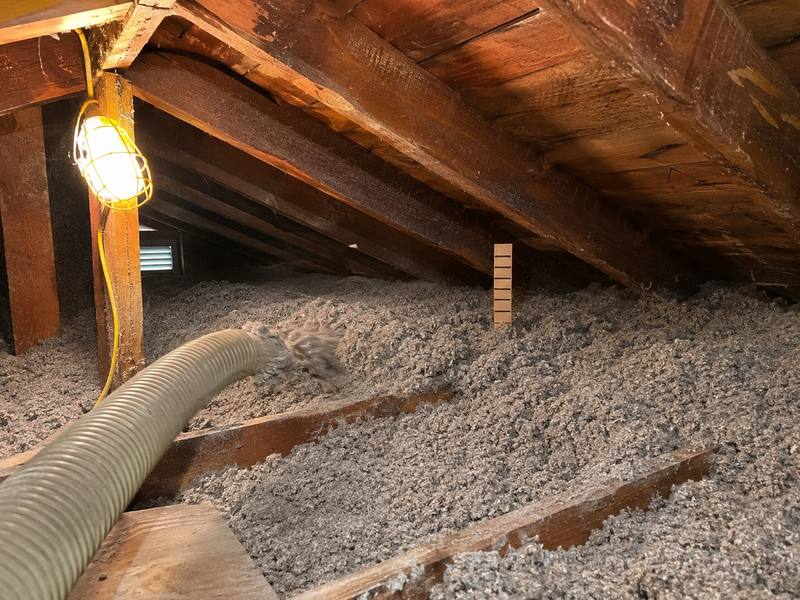
Blown-In Top-Ups
Loose fibreglass or cellulose blown over the attic insulation you already have, once anything wrong up there is fixed.
Learn more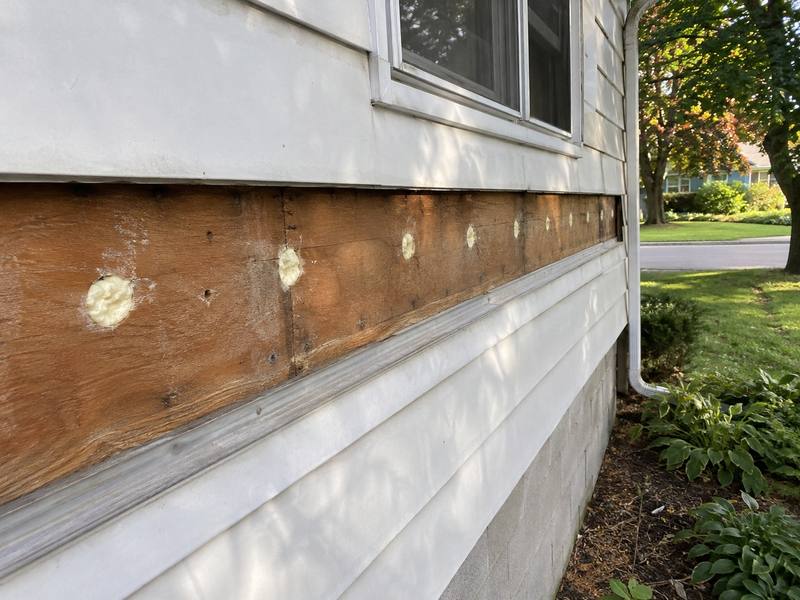
Wall Insulation
Empty exterior walls dense-packed through small drilled holes and plugged, without gutting the rooms.
Learn more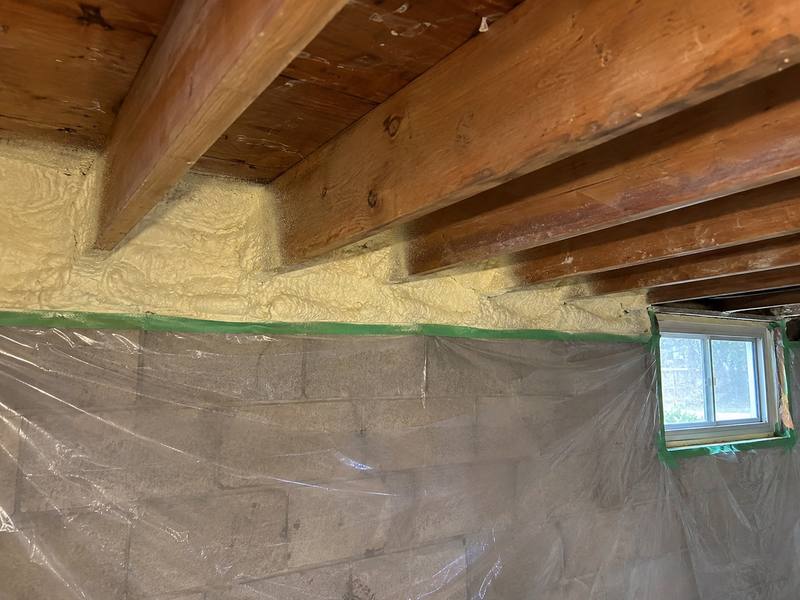
Spray Foam Insulation
Closed-cell foam on rim joists, basement walls and garage ceilings, and a straight answer where foam isn't needed.
Learn more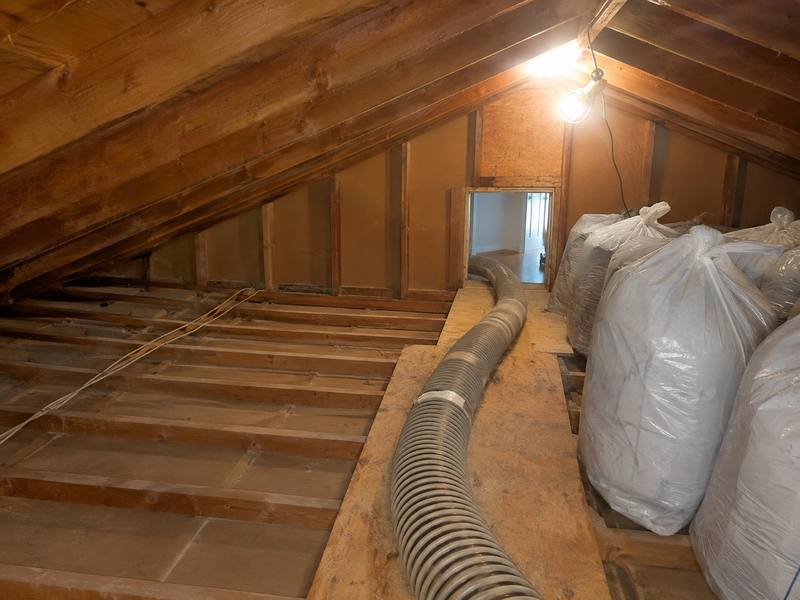
Attic Insulation Removal
Old, wet or rodent-damaged attic insulation taken out before new goes in. Vermiculite stays put until a qualified lab tests it, not us.
Learn more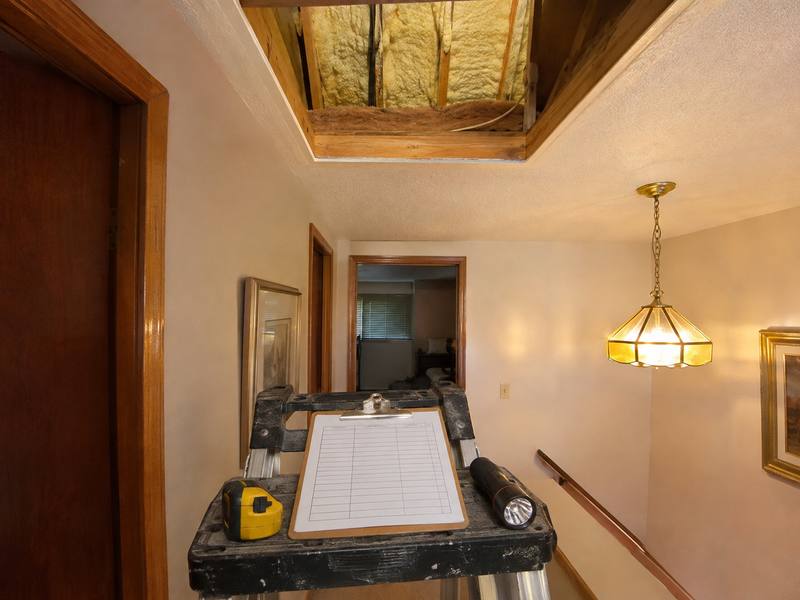
Attic Insulation Rebates & Cost
How Home Renovation Savings fits around an attic job, and what decides the cost of the work.
Learn more
Get a quote
Get an attic insulation quote in Mississauga
Call (437) 563-1473 or send the form. Tell us what you've noticed in the house, like a cold room, frost in the attic or a drafty floor. We'll look at the attic and give you a written list and a quote.