Prime Insulation Contractors Mississauga: Attic Insulation in Mississauga, ON
We look in your attic and tell you what's worth doing first, and what you can leave alone.
- Serving Mississauga & 15 neighbourhoods
- Open 24 hours
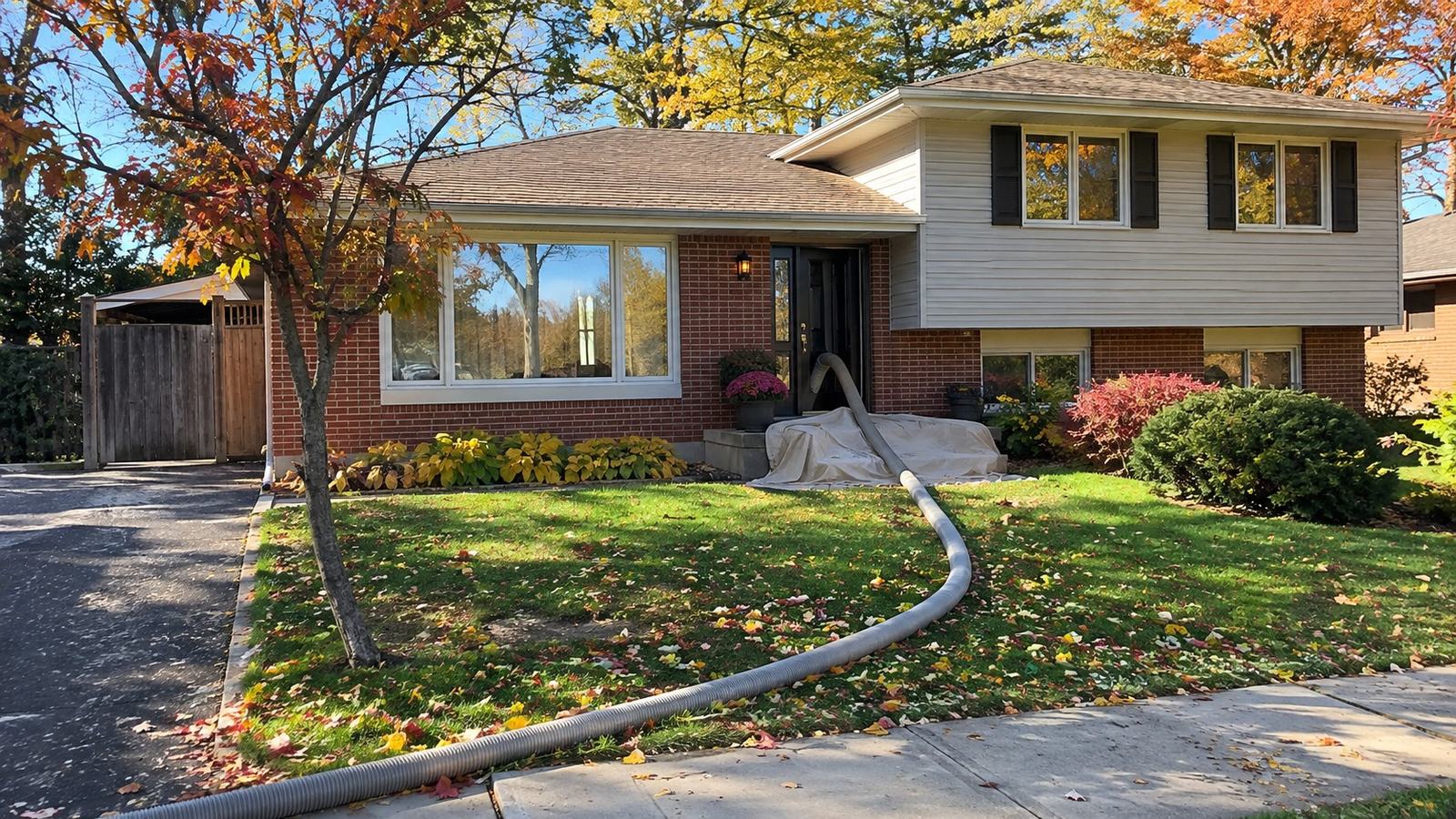
What our crew does
Prime Insulation Contractors Mississauga does attic insulation in Mississauga, covering Applewood, east Mississauga and nearby Etobicoke. Our crew does blown-in top-ups, wall insulation and spray foam, and pulls out old, wet or rodent-damaged insulation before any new goes in.
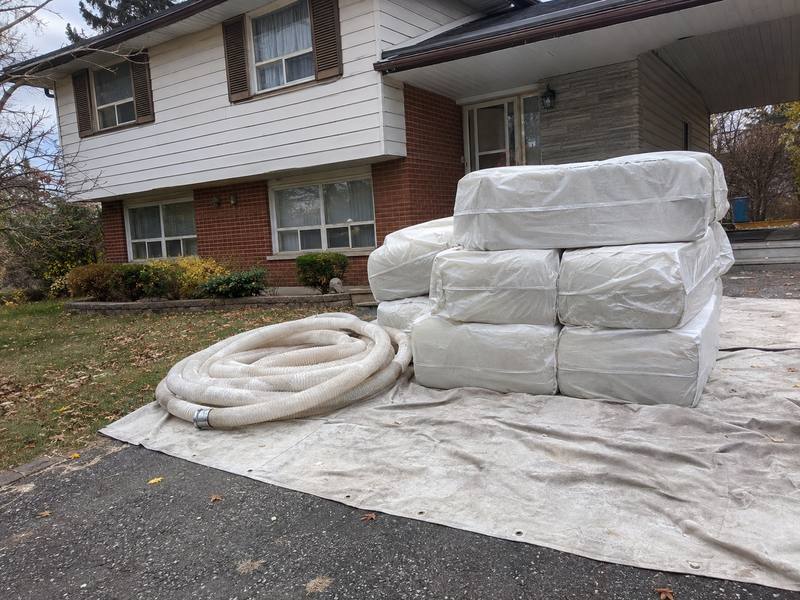
About us
Attic insulation contractors for east Mississauga
We insulate homes in Applewood, Dixie, Rathwood and Lakeview, plus nearby Etobicoke. A lot of the 1960s and 70s backsplits and bungalows in east Mississauga still have their original insulation. Our crew also works in plazas and light industrial units around Dixie Road.
Every house gets the same call. Keep what still works, fix what is wrong, add what is missing. Then we sort it into what needs doing now, what can come next and what you can leave alone.
- We keep what still works. If the insulation is dry, clean and close to where it should be, it stays put and the new material goes on top. A wall that is already full gets left alone.
- We sort out what is wrong. Wet, soiled or rodent-damaged insulation comes out before anything new goes in. If the cause is a job for a roofer or another trade, we tell you which trade.
- We add what is missing. Sealed top plates, baffles at the eaves, and blown-in to the depth on the bag's chart. Empty walls and bare rim joists go on the list when their turn comes.
The work
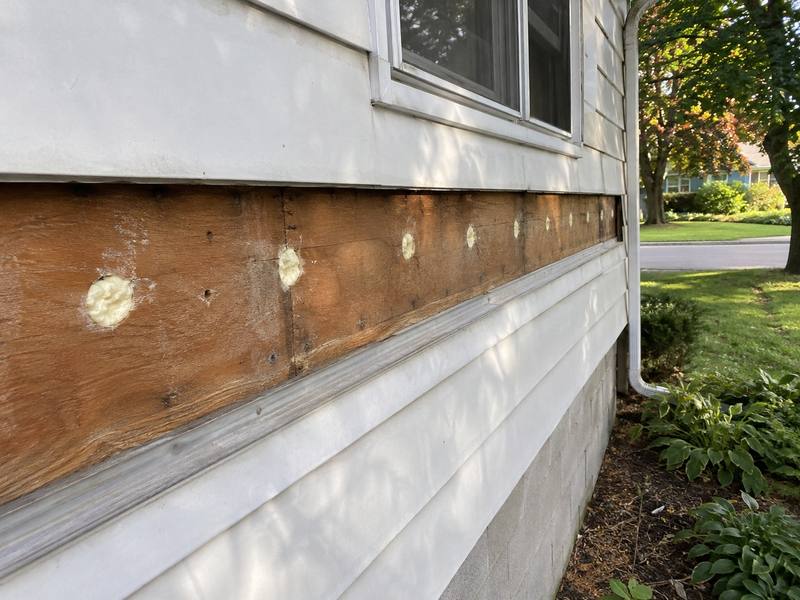
Up close on the job
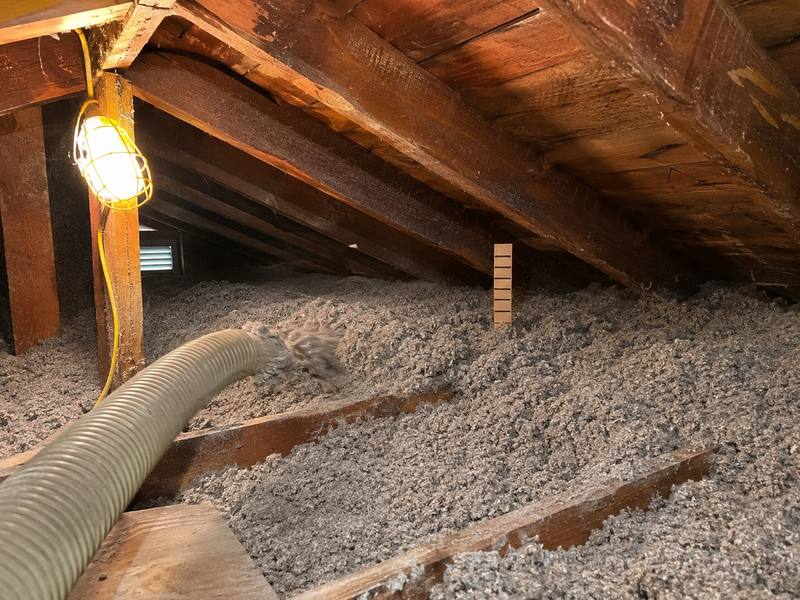
What needs doing now, what comes next, what can wait
We sort every attic the same way, item by item, into now, next or leave alone. The list tends to look like this:
- Now: wet, soiled or rodent-damaged insulation. It has stopped working, and it hangs on to whatever got into it.
- Now: frost or dark staining on the underside of the roof deck. Moisture is getting up there, and we need to find where it's coming from before anything else goes in.
- Now: a bathroom fan duct that ends in the attic instead of outside. Every shower blows damp air straight onto the insulation.
- Now: vermiculite. This is where we put the tools down. Nobody touches it, and we recommend you have a qualified lab or abatement firm test it before any work goes ahead. We don't sample it, move it or arrange the test.
- Next: air leaks through the ceiling, at the top plates, around plumbing stacks, through wiring holes and around the attic hatch.
- Next: a thin or uneven attic floor, with joists showing in some bays and drifts piled up in others.
- Next: soffit vents buried under insulation, so outside air can't move through the attic.
- Leave alone: dry insulation that is close to where it should be. Being a little short on depth isn't reason enough for a job.
- Leave alone: exterior walls that are already full.
The written list and the quote
The visit ends with that list written down for your house, plus a quote for the parts you want done. You can do the now items and stop there, or take on the next items at the same time. If part of the job belongs to another trade, like a roofer for a leak, the list says so and you know who to call.
Attic insulation in east Mississauga's 1960s and 70s houses
A lot of the 1960s and 70s backsplits and bungalows around Applewood, Dixie and Rathwood still have their original insulation. The first suburban growth here came after the Second World War, when Applewood Acres, near the QEW and Dixie Road, became the first major planned development in what was then Toronto Township. Building spread north and west from there.
If your attic is that old, it may still have its first thin layer, settled over the decades and patchy between the joists. Under it there may be air leaks at the top plates and around pipes and wires that nobody ever sealed.
The attic floor is what keeps the house warm in January and cool in July. Insulation there slows heat both ways, holding warmth in the rooms in winter and keeping summer attic heat from working down into the bedrooms. A thin, leaky layer doesn't do either job well. You notice it as cold rooms upstairs and drafts along the ceiling.
What a top-up involves
A blown-in top-up is more than a layer of new insulation. This is what the work should include, so you can check any quote against it, ours too:
- Air sealing at the ceiling comes before any insulation: top plates, plumbing stacks, wiring holes and light boxes get sealed from the attic side.
- Baffles go in at the eaves, between the rafters, so the soffit vents stay open once the new insulation is down.
- Depth markers go on the joists across the attic, so you can read the finished depth from the hatch.
- Blown-in fibreglass or cellulose goes on to the depth the bag's coverage chart gives for the target.
- The hatch gets insulation fixed to its back and gets sealed where it sits in its frame.
- Before we leave, you see the markers with the new insulation level against them.
Why the sealing and baffles matter
If a quote leaves out the sealing or the baffles, ask why. Loose fill blown over open gaps just hides them, and warm, damp house air keeps rising through the insulation into the attic. Without baffles, the new insulation drifts into the eaves and blocks the soffit vents that keep the roof deck dry.
How much insulation to aim for
SB-12 in the Ontario Building Code sets a minimum nominal R-60 for a ceiling with attic space in Zone 1 compliance packages A1, A2, A4 and A6, and R-50 in A3 and A5. Mississauga is in Zone 1. SB-1 puts it at 3880 heating degree-days, under the 5000 that marks Zone 1.
Those numbers are for new work. In an existing attic they're a reference point to build toward, not a rule your house has to meet, and they come in handy when you're comparing one quote with another.
The product decides the depth. Every bag of blown-in fibreglass or cellulose has a coverage chart, and that chart says how deep the material goes for a given R-value. We set the depth markers on your joists from that chart, not from a rule of thumb.
Frost, mould and wet insulation
Frost on the underside of the roof deck in winter, dark staining on the wood, wet patches in the insulation: they all mean moisture is getting into the attic. There's a short list of places it comes from:
- Warm, damp air leaking up from the house through gaps in the ceiling, then condensing and turning to frost on the cold roof deck.
- A bathroom fan duct that ends in the attic, or has come loose, and dumps shower air onto the insulation.
- A roof leak, which usually shows as a wet patch or staining in one spot rather than across the whole attic.
Fix the cause before the top-up
The cause gets fixed first, by the right trade. A roofer handles a leak, and whoever installs bathroom fans reroutes the duct so it ends outside. Our part is sealing the air leaks at the ceiling. Mould on the wood is a job for a mould remediation specialist, not us.
Why new insulation waits for a dry attic
A top-up over a wet attic just gets wet too. So the new insulation waits until the attic is dry and the source has been dealt with. Our frost and mould page goes through the warning signs in more detail.
Fibreglass or cellulose
Blown-in fibreglass and cellulose both go on loose over the insulation already in the attic, and either one works on an open attic floor. The best insulation for attic floors in your house comes down to the attic itself:
- Cellulose is denser, so it slows air moving through it a little better than fibreglass.
- It's also heavier and doesn't like getting wet, which matters over an old ceiling or in an attic with any history of moisture.
- Fibreglass is lighter and puts less weight on the ceiling below.
How we choose between them
It depends on what we find in your attic, and the quote says why. Our blown-in insulation page covers both materials and how a top-up gets blown in.
Old insulation: keep it, top it up or take it out
Dry, clean insulation stays, and the new layer goes on top. There's no reason to pull out fibreglass or cellulose that's still doing its job.
If it's wet, mouldy, soiled with droppings or torn up by rodents, it comes out first, and we clear the attic floor before new material goes in. Mould on the wood goes to a mould remediation specialist first. Our attic insulation removal page explains how that goes. If animals have been living up there, a pest-control company deals with them, and with how they got in, before we start.
Vermiculite is the exception. It looks like light, shiny granules, often gold or silvery brown. If we come across it, our crew stops and leaves it exactly where it is, and we recommend you have a qualified lab or abatement firm test it before any work goes ahead in that attic. We don't sample, test or remove it, and we don't set up the test.
Walls, basements and garage ceilings
We insulate exterior walls without gutting them. Our crew drills small holes into each empty cavity, dense-packs insulation through them and plugs the holes, so your drywall and plaster stay where they are. Our wall insulation page explains drill-and-fill in full.
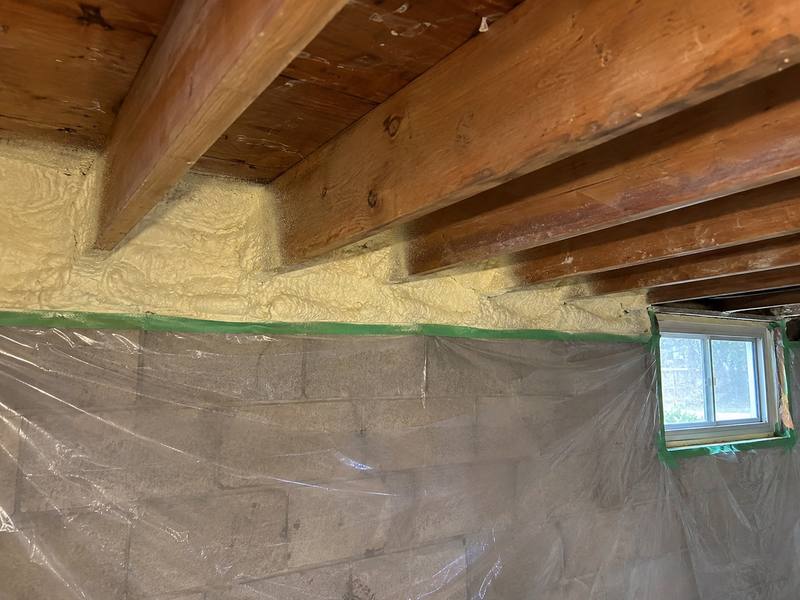
Spray foam is for basement walls, rim joists and garage ceilings. A finished garage ceiling has to be opened first, and whoever puts the ceiling back has to restore it to fire-separation standard. We spray the open bays in between and don't do the drywall ourselves; the quote names who does. If we spot a gap in the wall or ceiling between the garage and the house, we point it out, because that's a fire-separation matter for a qualified contractor or the City. Our spray foam insulation page covers where foam belongs.
On order: the open attic floor usually comes before the walls because it's easy to get to. A bare rim joist can be done alongside the attic. A room over the garage moves up the list if it's the coldest room in the house.
Plazas and light industrial units
We also work in plazas and light industrial units around Dixie Road and nearby Etobicoke. It's the same call as a house: keep what still works, fix what's wrong, add what's missing. You get the same written list, and a quote for the parts you pick.
Rebates for attic insulation
Home Renovation Savings, from Enbridge Gas and Save on Energy with support from the Ontario Government, lists attic insulation among the rebates that don't need a home energy assessment. Terms and conditions apply. Whether your job qualifies is up to the programme's current terms, so read them before work begins.
We don't do, book or arrange energy assessments. Our attic insulation rebates and cost page goes through what drives the price of an attic job and where the programme fits.

Areas
Insulation service areas in Mississauga and nearby Etobicoke
We cover Applewood. In Mississauga that means Applewood, Rathwood, Lakeview, Cooksville, Hurontario, Matheson, Creditview and Courtney Park, and nearby we cover Alderwood, Eringate, Deane Park, Islington, The Kingsway, Mimico and Old Mill. Each neighbourhood has its own page below.
FAQ
Attic insulation questions from Mississauga homeowners
Blown-in fibreglass or cellulose is the usual pick for an open attic floor. It fills in around the joists and wiring and builds depth over what's already up there. Cellulose is denser and slows air a bit better, while fibreglass is lighter on the ceiling below. Spray foam is more for rim joists and garage ceilings than for an open attic floor.
It depends on the attic itself, not just its size. What moves the price is the attic area, how much insulation is there now, the target you're building to, baffles at the eaves, air sealing, whether anything has to come out first and how easy the hatch is to work through. Once we've looked in the attic, you get a written quote.
For new construction in Zone 1, which includes Mississauga, SB-12 sets a minimum nominal R-60 for a ceiling with attic space in compliance packages A1, A2, A4 and A6, and R-50 in A3 and A5. Those minimums are written for new work. In an existing attic they're a target to aim for, not a requirement.
The City of Mississauga's building permit page doesn't settle it. Insulation isn't on its list of projects that need a permit, and it isn't on the list of projects that don't. Zoning rules still apply even when no permit is needed. For a firm answer on your job, call the City at 311 before work starts.
No, not if it's dry and clean. It stays, and the new layer goes on top. If it's wet, mouldy, soiled or torn up by rodents, it comes out first so the new layer sits on a clean, dry base.
Attic baffles hold insulation back from the eaves so outside air from the soffit vents can still get up into the attic. Without them, blown-in insulation drifts into the eaves and smothers the vents. They go in between the rafters before any new insulation is blown.
Yes. An attic insulated at the floor still needs air coming in at the soffits and going out higher up, and baffles at the eaves keep that path open during a top-up. Adding roof vents is roofing work, so if the attic needs more venting, the list names the trade.
Yes. A sealed, deeper attic floor slows heat moving either way. In January it keeps the warmth in the rooms below, and in July it stops the heat building up in the attic from reaching the bedrooms.
The work in that attic stops, and nobody disturbs the vermiculite. We recommend having a qualified lab or abatement firm test it before any work goes ahead. We don't sample, test or remove it, and we don't set up the test for you.

Get a quote
Get an attic insulation quote in Mississauga
Call (437) 563-1473 or send the form. Tell us what you've noticed in the house, like a cold room, frost in the attic or a drafty floor. We'll look at the attic and give you a written list and a quote.